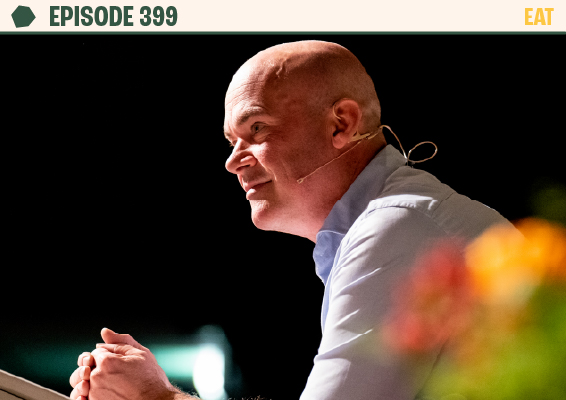

In this episode of The Proof, I’m joined by Dr Luc van Loon, one of the world’s leading researchers in protein metabolism, muscle physiology, and ageing. We explore what actually happens to protein once you eat it, how muscle adapts to training and inactivity, and why so much of the public conversation around protein misses the nuance.
We also dig into ice baths, anabolic resistance, plant based versus omnivorous diets, and why protein quality matters most when people eat less, not more. This conversation cuts through hype and focuses on what the evidence really tells us about muscle, health, and ageing.
What We Cover
- Why cold water immersion can blunt muscle adaptation when used immediately after training
- What muscle protein synthesis really measures, and why it is not the same as muscle growth
- How protein is digested, absorbed, and distributed across muscle, organs, and the brain
- Why anabolic resistance is driven more by inactivity than ageing itself
- How much protein is adequate versus optimal across different life stages
- What long term studies reveal about vegan versus omnivorous diets in older adults
- Why protein quality matters most when appetite and total intake are low
- The least amount of exercise needed to prevent muscle loss during illness or hospitalisation
This episode highlights how protein, movement, and context work together, and why simple rules rarely apply when it comes to muscle health and longevity.
You can connect with Dr Luc van Loon and explore his work in more detail via his research group at M3 Research, and his academic profile at Maastricht University, where you can find his publications and ongoing research in protein metabolism, muscle physiology, and ageing.
- Intro (00:00)
- How Protein Research Evolved in Exercise Physiology (02:07)
- How Muscle Protein Synthesis Actually Works (Mechanisms Explained) (04:01)
- Tracing Amino Acids From Food Into Muscle Tissue (07:00)
- Biggest Myths About Protein Intake (What the Public Gets Wrong) (10:02)
- Protein Digestion, Absorption, and Where Amino Acids Go (17:25)
- Anabolic Resistance Explained: Why Muscle Response Declines With Age (38:16)
- How Much Protein Do You Really Need? Optimal vs Adequate Intake (46:41)
- How Protein Digestion Studies Are Designed (And Their Limitations) (53:22)
- Omnivore vs Vegan Diets: Muscle Protein Synthesis Compared (1:00:12)
- Protein Quality vs Quantity: What Actually Builds Muscle (01:08:52)
- Protein Powders, Isolates, and Supplements: Do They Help? (01:11:08)
- Protein Requirements (01:15:08)
- IGF1, Protein Consumption and Cancer (01:16:32)
- Amino Acids Explained: How the Body Rebuilds Protein From Steak (01:22:34)
- Anabolic Response Explained: When Amino Acids Actually Build Muscle (01:28:59)
- Supplements and Muscle Protein Synthesis (01:30:35)
- Muscle Protein Turnover, Aging, and Preventing Muscle Loss (01:38:59)
Resources and links:
- Postexercise cooling impairs muscle protein synthesis rates in recreational athletes
- A Well-Balanced Vegan Diet Does not Compromise Daily Mixed Muscle Protein Synthesis Rates when Compared with an Omnivorous Diet in Active Older Adults: A Randomized Controlled Cross-Over Trial
- Vegan and Omnivorous High Protein Diets Support Comparable Daily Myofibrillar Protein Synthesis Rates and Skeletal Muscle Hypertrophy in Young Adults
- High-Protein Plant-Based Diet Versus a Protein-Matched Omnivorous Diet to Support Resistance Training Adaptations: A Comparison Between Habitual Vegans and Omnivores
- Post-prandial muscle protein synthesis rates following the ingestion of pea-derived protein do not differ from ingesting an equivalent amount of milk-derived protein in healthy, young males
- Dietary protein for athletes
- The protein intake level to maximize whole-body protein synthesis rates is substantially higher than the current recommended daily allowance for healthy adult males
Subscribe and stay connected:
Subscribe to The Proof on YouTube, Apple Podcasts or Spotify to ensure you never miss an episode. And don’t forget to follow me on Instagram and X for more insights and updates.
This episode is brought to you by:
38TERA
Consider 38TERA’s DMN prebiotic supplement a daily multivitamin for your gut. Formulated by yours truly and gastroenterologist Dr Will Bulsiewicz. Use code THEPROOF for a discount at checkout.
Function Health
Take charge of your health with advanced blood testing and personalised insights. Function Health offers a practical way to track key health markers such as cholesterol, blood sugar, and more. Learn more and join at functionhealth.com/simonhill for a $25 credit toward your membership. Only available to those living in the United States.
Pique Tea
Pique’s Nandaka provides sustainable, all-day energy and makes you feel like you’re doing something good for your body! Try Pique and get 20% off FOR LIFE when you shop exclusively at Piquelife.com/simon.
WHOOP
Whoop, the most advanced fitness and health wearable available. Your personalised fitness and health coach to recover faster, sleep better, and train smarter. Claim your first month free on join.whoop.com/simon.
More about Luc van Loon
Professor van Loon was appointed Professor of Nutrition and Exercise at Maastricht University in The Netherlands in 2010. Luc has an international research standing in the area of skeletal muscle metabolism, has published well over 540 peer-reviewed articles (more than 34.000 citations) achieving an H-index of 97. He was in the top 1% of cross- field (nutrition and physiology) highly-cited scholars globally for 2023. Current research in his laboratory focuses on the skeletal muscle adaptive response to physical (in)activity, and the impact of nutritional and pharmacological interventions to modulate metabolism in both health and disease. The latter are investigated on a whole-body, tissue, and cellular level, with skeletal muscle as the main tissue of interest. He is active in various media to translate research findings to the general public, highlighting the impact of nutrition and physical activity to support performance and health.