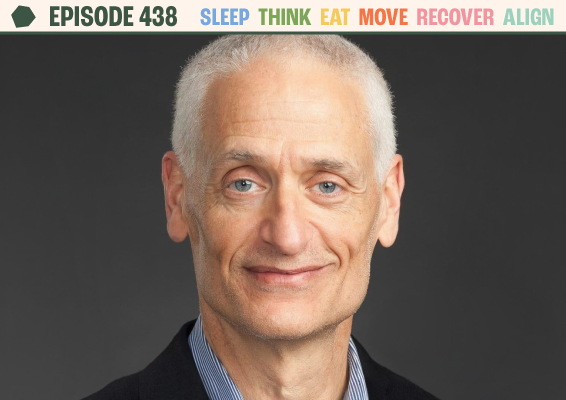

This is Christopher Gardner’s eighth appearance on the show, and it is the most philosophical conversation we have had. Christopher is a nutrition scientist at Stanford, director of the Stanford Nutrition Studies Research Group, and the author of a new book, Food Sense: What to Eat and Why. Over more than 30 years he has run in excess of 20 human diet trials, including some of the most widely reported comparisons of low-fat, low-carb, Mediterranean, ketogenic, and vegan eating.
What makes this episode different is where we spend our time. Rather than relitigating the diet wars, Christopher walks me through the machinery underneath them: the trade-off every nutrition scientist makes between rigour and real life, why the definitive trial people keep waiting for is never going to be run, and what a null result is actually worth. I also put a few recent studies to him that cut against my own position, including Sam Klein’s ketogenic diet trial and Luke van Loon’s work on plant protein in older adults, to see how he handles data that doesn’t fit.
What we cover
- Why the trial that would settle most nutrition arguments, randomising people to two very different diets and following them for decades, will never happen, and what that means for how we read the evidence we do have
- The garlic study that consumed a $1.4 million NIH grant and 35,000 sandwiches and found nothing, and why Christopher is prouder of it than almost anything else he has published
- The four things every popular diet agrees on, from keto to low-fat vegan, and the six foods that divide them
- What happened when his keto versus Mediterranean trial in people with pre-diabetes and type 2 diabetes produced exactly two significant differences, one in each direction
- A study in which people ate a lot of saturated fat on a ketogenic diet and their LDL cholesterol didn’t move, and how Christopher reads a result that challenges his own position
- Why an older vegan group doing resistance training still lost muscle volume, and what that paper doesn’t tell us
- How the calcium and bone fracture story collapsed into “if you take them they work, and if you don’t they don’t”, and what that reveals about the gap between individual advice and public health strategy
- Why Christopher is shifting his attention away from randomised trials and towards hospital canteens, university dining halls, and military kitchens
What I appreciate most about Christopher is that he will tell you exactly how much weight a finding can carry, and then stop. That restraint is rarer than it should be in this field, and it is a large part of why he keeps coming back on the show.
To connect with Christopher Gardner, visit the Stanford Nutrition Studies Research Group, pick up a copy of Food Sense: What to Eat and Why, or find him on Instagram and LinkedIn.
- Philosophy and Nutrition Science (00:00)
- Does Garlic Lower Cholesterol? (05:49)
- Why Long Diet Trials Never Happen (16:19)
- Do Calcium Supplements Prevent Fractures? (26:33)
- Fermented Foods and Gut Health (31:34)
- Gut Microbiome Supplements: Hype vs Science (39:52)
- How to Stick to a Healthy Diet (51:30)
- Are Beans, Fruit, and Eggs Healthy? (58:22)
- Keto vs Mediterranean for Cholesterol (01:09:02)
- 3 Diets Compared: LDL Results (01:15:51)
- Vegan Diet and Muscle Loss (01:27:30)
- How to Fix the Food System (01:35:19)
- Eating for the Planet and Animals (01:44:39)
Resources and links:
- A self-selected vegan diet reduces skeletal muscle mass in healthy older adults: a randomized controlled trial
- Effect of diet macronutrient content on the cardiometabolic response to weight loss: A randomized clinical trial
- Effect of Low-Fat vs Low-Carbohydrate Diet on 12-Month Weight Loss in Overweight Adults and the Association With Genotype Pattern or Insulin Secretion
- Comparison of the Atkins, Zone, Ornish, and LEARN diets for change in weight and related risk factors among overweight premenopausal women: the A TO Z Weight Loss Study: a randomized trial
- Keto diet cut liver fat by 67% in a clinical trial
- Low-carb diet delivers added liver benefits beyond weight loss
- A Well-Balanced Vegan Diet Does not Compromise Daily Mixed Muscle Protein Synthesis Rates when Compared with an Omnivorous Diet in Active Older Adults: A Randomized Controlled Cross-Over Trial
Subscribe and stay connected:
Subscribe to The Proof on YouTube, Apple Podcasts or Spotify to ensure you never miss an episode. And don’t forget to follow me on Instagram and X for more insights and updates.
This episode is brought to you by:
38TERA
38TERA’s BDR is a clinically dosed gut health supplement for improved digestion, less bloating, better bowel movements and a healthier microbiome. Use code THEPROOF for a discount at checkout.
38Tera ships to the United States, Australia, and New Zealand.
IM8
With 92 nutrients, including Vitamin B12, Iodine, Selenium and Vitamin D, in highly absorbable forms, IM8 Daily Essentials is the perfect all-in-one daily multi-vitamin to ensure you meet your daily micronutrient needs. IM8 is offering an exclusive 10% off your first order with a free welcome kit when you enter the promo code SIMON at checkout on im8health.com.
IM8 ships to 27 countries including the U.S., Canada, the U.K., Australia, and many regions across Europe, Asia, and South America.
Function Health
Take charge of your health with advanced blood testing and personalised insights. Function Health offers a practical way to track key health markers such as cholesterol, blood sugar, and more. Learn more and join at functionhealth.com/simonhill for a $25 credit toward your membership. Only available to those living in the United States.
Function Health ships to 48 U.S. states, excluding Rhode Island, Hawai‘i, and Puerto Rico.
Momentous
My go-to supplement brand for protein and creatine is Momentous. Use code THEPROOF for up to 35% off your first order at livemomentous.com.
Momentous ships to many countries worldwide depending on local import regulations.
Shopify
Shopify, the world’s leading e-commerce platform, helps you turn browsers into buyers with the internet’s best-converting check out–up to 36% better compared to other leading e-commerce platforms. To boost your conversion rate, and grow your business, sign up for your one-dollar-per-month trial at shopify.com/proof.
WHOOP
Whoop, the most advanced fitness and health wearable available. Your personalised fitness and health coach to recover faster, sleep better, and train smarter. Claim your first month free on join.whoop.com/simon.
Whoop ships to 56+ international markets, including the US, Canada, most of Europe, Australia, New Zealand, UAE, Singapore, and parts of Asia.
More about Christopher Gardner
For more than 30 years, Christopher Gardner, PhD, Rehnborg Farquhar Professor of Medicine at Stanford and nutrition scientist, has been a key faculty member at the Stanford Prevention Research Center where he leads the Stanford Nutrition Studies Research Group. With a PhD in Nutrition Science from UC Berkeley, he has led over 20 human nutrition intervention studies, including trials of Mediterranean, Ketogenic, Vegan, Low-Fat and Low-Carb diets and their effects on cardiometabolic outcomes such as blood lipids, glucose, and inflammation.
He is recognised as a leading expert, both nationally and internationally, on what to consume and avoid for optimal health, and how to best motivate individuals to achieve healthy dietary behaviours. He recently completed a two-year term serving on the 2025 US Dietary Guidelines Advisory Committee and is the past chair of the American Heart Association’s Nutrition Committee. Some of his current interests include stealth nutrition, unapologetic deliciousness, and institutional food settings. He is currently working on personalised nutrition explorations with several colleagues, with particular focus on the gut microbiome. He is frequently consulted by major outlets like The New York Times, CNN, and MSNBC for his expertise. His work was recently featured in the Emmy-awarded docuseries (January 2024) – You Are What You Eat: A Twin Experiment.